


III. Plastics: It's all recyclable. Or is it?
- mindtheeco

- Mar 22, 2021
- 4 min read
Updated: Apr 28, 2021
Do you also experience that 'feel good' sensation when you throw your plastic packaging in the recycling bin?
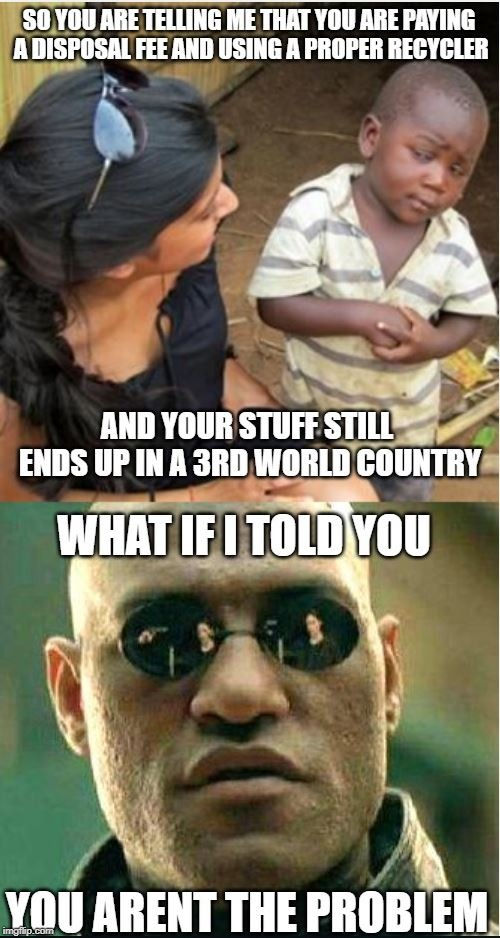
Well, I do. It feels like you have done your part to help the environment by simply putting the right trash in the right place. Unfortunately, like most problems in sustainability, things are never simple. If we just took a step further to ask ourselves, "where is my plastic waste actually going?", the feel good sensation would quickly transform into a state of desperation. I mean, we already know that the global recycling rate is no more than 20%.
I don't want to discourage you, on the contrary, this post is a crucial step in our plastic journey, because by understanding the recycling industry, we can demand more realistic and efficient solutions to generate real change.
Okay, so why is so little plastic recycled?
Let's just say that recycling plastic is a complex, a very complex system. Quick things to keep in mind:
1. Not all plastic is recyclable. We have thermoset plastics, which although not representative of our daily consumer goods plastic, cannot be melted into new materials.
2. The proper disposal depends on the type and the condition of plastics that are accepted by the recycling facilities. Thus, there are no standards on plastic recycling, varying for each municipality.
3. An efficient recycling system depends on local regulations. Public investment is crucial to the development and sustainability of recycling systems. It also allows for the proper collection of recyclables.
4. A comprehensive set of recycling facilities is required to receive the huge amount of plastic waste we produce. This gets tricky, because plastic packages have different manufacturing processes, and not always even the same type of plastic can be recycled together.
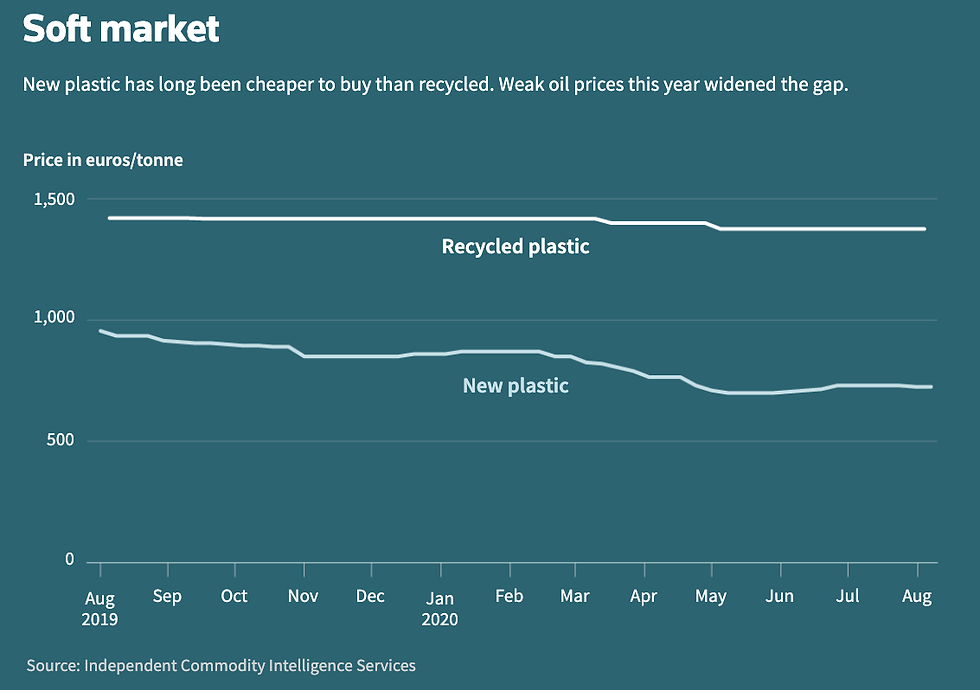
5. If the market is willing to buy recycled goods, so will recyclers be willing to pay for your recyclables. Recycled goods compete with new plastics which are of better quality and price. If environmental costs of virgin plastic are not taken into account, a system that is already hard to develop, ends up with a lower chance of survival.
Now that you know that setting up a plastic recycling system on a large scale can be extremely complex, I'll ask you to take a deep breath for what I'm about to tell you.
The plastic industry knew it all along.
For how long exactly have we known that recycling wouldn't work?
A joint investigation by NPR and PBS Frontline found documents dated back to the 1970s that stated the economic infeasibility of recycling plastic.
There is serious doubt that [recycling plastic] can ever be made viable on an economic basis - written by one industry insider in a 1974 speech.
Recycling plastic is 'costly,' it says, and sorting it, the report concludes, is 'infeasible'. - found in a 1973 report written by scientists.
So, what did the plastic industry do with this knowledge?

Yeah, a little bit like this picture, they kind of said "I don't care".
Instead, companies in the plastic industry including Exxon, Chevron, Dow and DuPont invested millions of dollars on ad campaigns to promote the benefits of plastic and recycling.
Despite of launching a number of feel-good projects which in reality resulted in very few recycled plastic, the industry would always go back to the same conclusion: Recycling plastic doesn't make economic sense, there are too many types, which require different sorting and processing, and the infrastructure nor the demand for it exist.
And there is more…
While spending millions in advertising, a quiet campaign to lobby almost 40 states led to the creation of the Plastic Resin Identification Code.
Do you know those triangles with a number inside printed in consumer goods packaging?
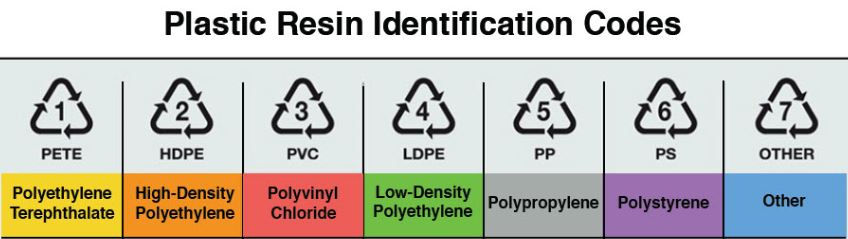
They were also a creation by the plastic industry. And although, today, they are used by municipalities to inform citizens which numbers are accepted in the city's collection system, they were not well received by recyclers back then. In the investigation, Coy Smith, owner of a recycling facility mentioned that all “this did was make all plastic look recyclable” and that the code was being misused as a “green marketing tool”. Why greenwashing? Well, the recycling symbol is exactly like these identification codes, only without the number inside. So remember, just because a package has a resin code doesn't mean it's recyclable.
What about now? Is the industry doing something to change that?
Let's not forget that behind the plastic industry is no one else but the fossil fuel industry, which makes more than 400 billion dollars a year with plastic. So, while demand for oil and gas in the energy sector decreases, petrochemical companies are betting on plastics. Chevron Phillips Chemical, for instance, invested in a $6 billion plastic manufacturing plant in Sweeny, Texas.
The industry is also funding the advocacy group Alliance to End Plastic Waste which has "launched its most expensive effort yet to promote recycling and cleanup of plastic waste.” (Sullivan, 2020) Doesn't this approach sound familiar?
I will leave you with a quote by Larry Thomas, a former president of the Society of the Plastics Industry (today - the Plastics Industry Association):
Nobody that is producing a virgin product wants something to come along that is going to replace it. Produce more virgin material — that's their business.
Fun (but not really) Fact:
Since the coronavirus struck, recyclers worldwide saw their businesses shrink by more than 20% in Europe, by 50% in parts of Asia and as much as 60% for some firms in the United States.
As demand for fossil fuels decreased during the pandemic, so did their price. Virgin plastic, then, became even cheaper to produce. We have long known that recycling does not make economic sense. With COVID, this is more true than ever.
Are you still here?
Amazing, you made it!! Exploring the recycling crisis is a big step in our plastic journey and I am glad you made it until the end. I hope you are not feeling too discouraged. Here at Mind the Eco, we don't stop at problems, we search for solutions.
So, head on to our next post, and discover how we can tackle the plastic crisis beyond recycling. I'll see you there!
Did you enjoy our content? Consider supporting Mind the Eco: Buy me a coffee ☕️
Sources: Brock, J. (2020, October 5). The Plastic Pandemic: COVID-19 trashed the recycling dream. Reuters. https://www.reuters.com/investigates/special-report/health-coronavirus-plastic-recycling/
Klein, R. (2014, August 22). Plastics Recycling: You’re Doing it Wrong. And So is Everybody Else! Triple Pundit. https://www.triplepundit.com/story/2014/plastics-recycling-youre-doing-it-wrong-and-so-everybody-else/41486
Sullivan, L. (2020, September 11). How Big Oil Misled The Public Into Believing Plastic Would Be Recycled. NPR. https://choice.npr.org/index.html?origin=https://www.npr.org/2020/09/11/897692090/how-big-oil-misled-the-public-into-believing-plastic-would-be-recycled
Sedaghat, L. (2018, April 13). 7 Things You Didn’t Know About Plastic (and Recycling). National Geographic Society Newsroom. https://blog.nationalgeographic.org/2018/04/04/7-things-you-didnt-know-about-plastic-and-recycling/
Comments